
Packing for a serviced apartment is different from packing for a hotel. You’ll have a kitchen, often a washing machine and more room to spread out, so you can pack lighter and smarter. This guide sets out what to bring, what’s usually already there and what to leave at home, with notes on London’s weather, power sockets, paying for travel and settling into a longer stay.
Use it as a checklist, then adjust for your own trip: the length of your stay, the season and who is travelling with you.
In this guide
- Why you can pack lighter
- What’s usually provided and what to bring
- Documents and money
- Power, tech and chargers
- Clothing for London’s weather
- Footwear and walking
- Toiletries and health basics
- Kitchen and groceries: what to buy when you arrive
- If you’re working during your stay
- Packing for children and pets
- Getting around: what to have ready
- What to leave at home
- The final checklist
- Frequently asked questions
Why you can pack lighter
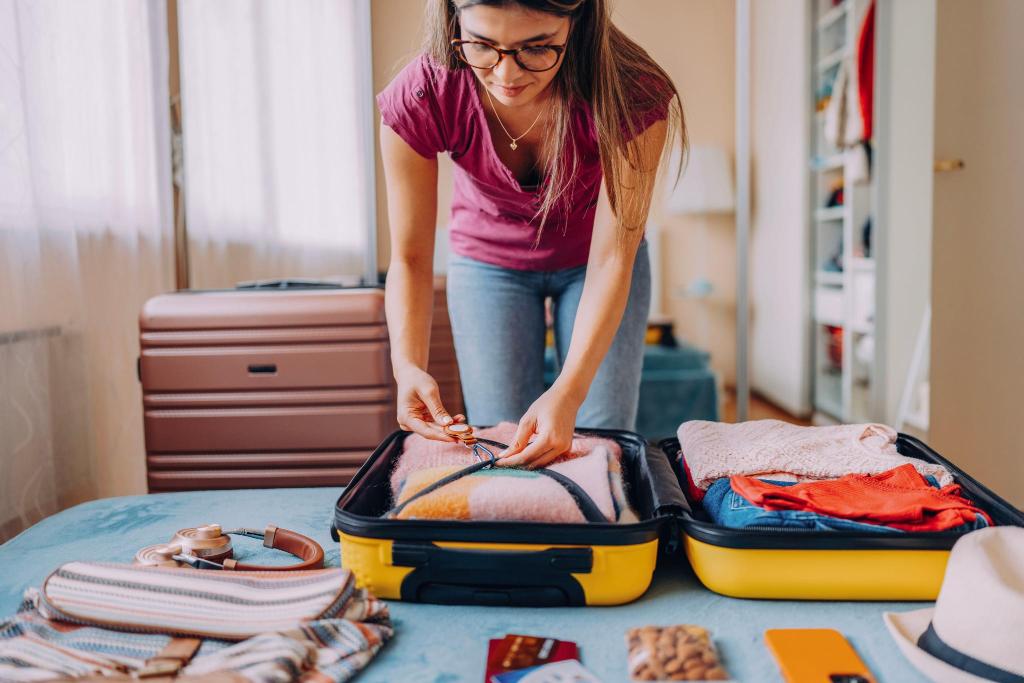
A serviced apartment is a fully equipped, furnished home with hotel-style services on top, so much of what you’d normally carry is already there. Many apartments have a washing machine, which means a week’s clothing can cover a month’s stay. The kitchen is stocked with cookware, crockery and cutlery, and bed linen and towels are normally provided. What’s included varies by building, so it’s worth asking us before you travel; if you’d like to see what a typical rate covers, our guide to booking a serviced apartment explains how we confirm it for you.
The longer your stay, the more this matters. For a month or more, packing for about a week and doing laundry is usually more practical than bringing everything. Our guide to long-term serviced apartments covers what else to look for.
What’s usually provided and what to bring
As a general guide (please confirm details for your specific apartment):
| Usually provided | Worth bringing |
|---|---|
| Bed linen and towels | Your own toiletries and any personal-care favourites |
| Equipped kitchen: cookware, crockery, cutlery, kettle | Favourite tea or coffee, or any special dietary staples |
| Washing machine in many apartments | A small amount of laundry detergent or pods, if you’d like to start straight away |
| Wi-Fi and a TV in most buildings | Headphones, chargers and your own devices |
| Regular housekeeping, with frequency varying by building | A UK plug adapter, if your devices use a different plug |
Items like hairdryers, irons and ironing boards are common but not guaranteed. If any of those matter to you, ask us to check before you pack.
Documents and money
- Travel documents. Keep your passport or ID, booking confirmations and your apartment’s address and contact details together in one easy-to-reach place.
- Digital copies. Email or save copies of your key documents so you have them if anything is lost.
- A contactless card. Most shops, cafés and public transport accept contactless payment. Cards issued outside the UK often work too, but your bank may charge overseas fees, so check with your card issuer before you travel.
- A little cash. Most places take cards, but a small amount of pounds is handy for the occasional exception.
- Insurance details. Travel or medical insurance paperwork, if you have it, should be easy to find.
Power, tech and chargers
The UK uses its own three-pin plug (type G) and a mains supply of 230 volts. If you’re travelling from a country with a different plug, you’ll need an adapter, and it’s sensible to bring two or three so you can charge several devices at once. Many modern phone, laptop and camera chargers handle a range of voltages, but the label on the charger will tell you. Check each device before you plug it in, because an adapter changes the plug shape, not the voltage.
- UK plug adapters, ideally more than one.
- A multi-port USB charger, which saves on sockets and weight.
- A power strip or extension lead, if you have lots of devices (suitable for UK mains).
- A portable battery pack for long days out.
- Headphones for working or relaxing without disturbing neighbours.
Keep your phone plan in mind too. Check roaming charges with your provider before you leave, or consider a local SIM or eSIM if you’re staying for longer.
Clothing for London’s weather

London has four seasons, but the weather can change within a day, with light showers and cloud possible at any time of year. The sensible approach is layers and a compact umbrella or waterproof jacket.
| Season | What to expect | What to pack |
|---|---|---|
| Spring | Changeable; sunny and mild one day, cold and wet the next | Layers, a light jacket and a compact umbrella |
| Summer | Mild and pleasant, with long days and occasional showers | Light clothing, a sweater or jacket for evenings, sun cream and sunglasses |
| Autumn | Temperatures fall noticeably by October; often the wettest season | Waterproof outerwear, warm layers and an umbrella |
| Winter | Cold and often damp, with the occasional frost | A warm coat, hat, gloves and scarf, plus layers for heated interiors |
Check the forecast a few days before you leave and add or remove layers. If you’ll be attending meetings or smart events, pack one or two dressier outfits, and plan to launder the rest.
Footwear and walking
London is a walking city. Even with good transport, you’ll often walk between stations, through parks and along the river. Bring at least one pair of comfortable, broken-in shoes you can wear all day, ideally water-resistant, plus a smarter pair if you need one. Pack fewer pairs than you think you need; shoes take up the most room.
Toiletries and health basics
- Regular medication. Bring enough for your stay in its original packaging, and keep it in your hand luggage when flying. If you’re unsure, ask your pharmacist or doctor.
- A small first-aid kit with plasters, pain relief and anything you usually rely on.
- Prescriptions and glasses. Bring a spare pair of glasses or contact lenses, plus a copy of your prescription.
- Travel-size toiletries for the journey, with the full-size items bought locally. Pharmacies and supermarkets are easy to find in every neighbourhood.
If your stay is linked to a medical appointment, see our guide to serviced apartments near London’s top hospitals.
Kitchen and groceries: what to buy when you arrive
One of the biggest advantages of a serviced apartment is the kitchen. You don’t need to pack cooking equipment, and you can stock up when you arrive:
- First-night basics. Milk, tea or coffee, bread and breakfast items from a nearby supermarket or convenience store.
- A weekly shop. Most London neighbourhoods have supermarkets, and many offer online delivery too.
- Local food markets for fresh produce and baked goods, which are a nice part of a longer stay.
- Cleaning basics. Washing-up liquid and similar essentials are often provided at the start, with more bought as needed.
If you’re working during your stay
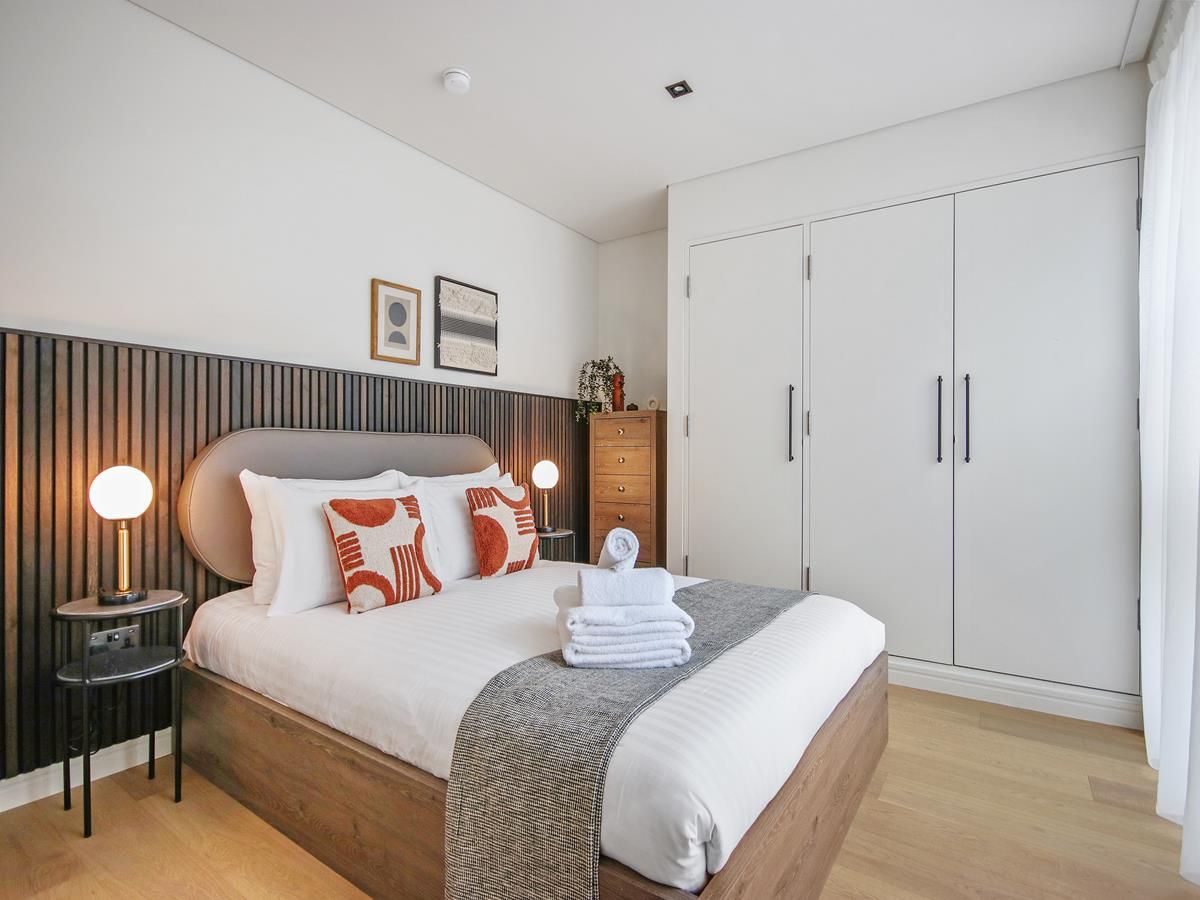
If part of your stay is for work, a few extras make a big difference: your laptop and charger, a mouse and any adapters, noise-cancelling headphones for calls, and a notebook or tablet. Ask us about the desk or workspace in your apartment and the Wi-Fi provided, so you know what you’ll need to bring. For short work trips, our solo business trip checklist covers the practical details, and if you’re starting a new job, see our guide to temporary housing when starting a new job in London.
Packing for children and pets
With children, think about comfort items, favourite snacks, a few toys or books and any child-specific equipment you can’t do without. We can often arrange items such as cots or high chairs in advance, so it’s worth asking before you pack a bulky version. Our family-friendly serviced apartments guide covers what to look for.
If you’re bringing a pet, tell us early so we can confirm the apartment is suitable. Pack their bed or blanket, food, bowls, lead and any medication, and see our pet-friendly serviced apartments guide for more.
Getting around: what to have ready
You can pay for the Tube, buses and many other services in London with a contactless bank card or a phone or watch linked to one. Transport for London says to use the same card or device each time you touch in and out so your fares can be capped, and notes that overseas cards may work but could carry extra charges. Some cards from certain countries aren’t accepted, so it’s worth reading TfL’s guidance on contactless and mobile pay as you go before you travel.
Also helpful: an offline map of your area saved to your phone, a fully charged battery pack, and your apartment’s address and contact details saved somewhere easy to find. If you’d like help choosing an area that suits your plans, our guide to the London neighbourhood guide is a good starting point.
What to leave at home
- Towels and bed linen, which are normally provided.
- Cookware and crockery, since the kitchen is equipped.
- Bulky toiletries you can easily buy here.
- Too many shoes. Two or three pairs go a long way.
- Heavy winter clothing in the warmer months.
- Valuables you don’t need, such as spare jewellery.
The final checklist

- Travel documents, copies and booking confirmations
- Contactless card, a little cash and your bank’s overseas-use details
- UK plug adapters, chargers, a battery pack and headphones
- Clothes for the season, layers and a compact umbrella
- Comfortable walking shoes
- Medication, a basic first-aid kit and spare glasses or lenses
- Work essentials, if you’ll be working
- Items for children or pets, if they’re travelling
- Your apartment’s address, arrival instructions and a contact number
Frequently asked questions
What should I pack for a serviced apartment in London?
Pack clothing for the season, comfortable shoes, your devices and chargers with a UK adapter, personal toiletries, any medication and your travel documents. Bed linen, towels and kitchen equipment are normally provided, so you can leave those at home.
Do serviced apartments provide towels and bed linen?
Normally yes, but it varies by building. We confirm what’s included for the apartment you choose, so you know before you travel.
Do I need a plug adapter in London?
If your devices use a plug other than the UK three-pin type, yes. The UK mains supply is 230 volts, so check that each device is rated for it. An adapter changes the plug shape, not the voltage.
Can I do laundry during my stay?
Many serviced apartments have a washing machine, which is why you can pack lighter for a longer stay. We’ll confirm the laundry arrangements for your apartment.
How do I pay for transport in London?
You can use a contactless bank card or a phone or watch linked to one. Use the same card or device each time you touch in and out, and check with your bank about overseas fees. See Transport for London’s website for current details.
What happens if something goes wrong in my apartment?
Many of the properties we work with are part of a wider portfolio, often between 25 and 300 apartments, so there’s frequently the option of moving you to another apartment in the same portfolio if there’s a maintenance issue such as a boiler or electrical fault.
Fully accredited independent London serviced apartment agents with over 30 years of combined local experience.
Not sure what your apartment includes?
Tell us your dates and who’s travelling, and we’ll confirm what each apartment provides so you know exactly what to pack, free of charge.
See our serviced apartments or speak to Robert and Polly directly. No fees, no obligation.